
The charm of a white picket fence, without the headaches
White picket fencing does something to an outdoor setting. It frames the marquee, lines the aisle, defines the garden, and somehow makes everything look like it belongs in a magazine. Whether it is a wedding reception, a summer festival, or a corporate garden party, picket fencing is one of those details that guests notice without quite knowing why the venue feels so put together.
If you are a wedding planner, event organiser, venue stylist, or marquee hire company, the question is not whether picket fencing works. It does. The question is whether you should hire it or buy it outright. And the answer depends on factors most people do not think about until the bill arrives and the storage unit is full.
What Our Picket Fencing Looks Like
Before we get into the hire-versus-buy debate, the product itself. GT Trax supplies white wooden picket fencing panels, purpose-built for events of all kinds. Each panel stands roughly 1.2 metres tall and 1.8 metres wide, with pointed finials along the top rail and a clean white painted finish. They come with galvanised steel feet that hold each panel upright on grass, gravel, or hardstanding. No digging, no concreting, no permanent installation required.
The panels are solid timber, not the flimsy trellis you might find at a garden centre. They are built to stand up to outdoor conditions, repeated handling, and the occasional overexcited guest leaning on them for a photograph. When maintained properly, they look immaculate season after season.
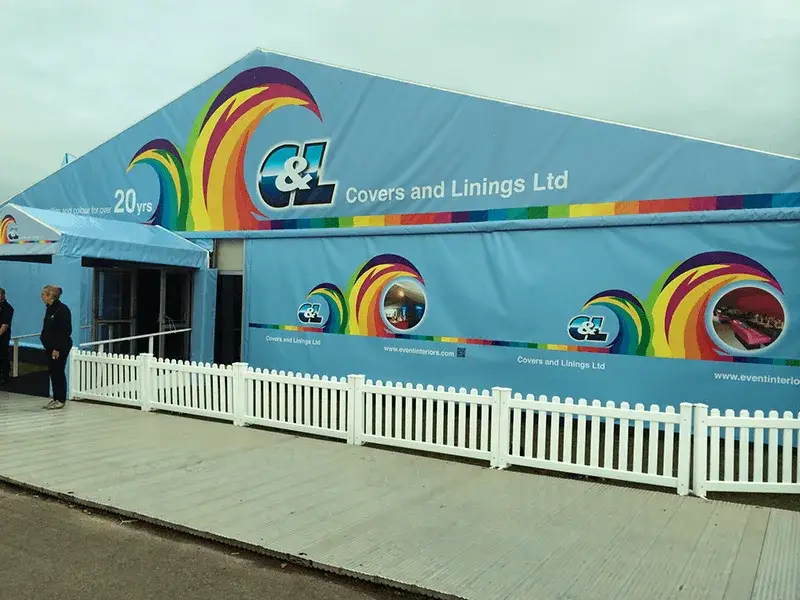
Creative Ways to Use Picket Fencing
Picket fencing is more versatile than most people realise. Here are the most popular ways our clients use it at weddings and events.
Ceremony aisle. Line both sides of the aisle with white picket panels to create a defined walkway. It frames the processional perfectly and looks stunning in photographs, especially with flowers or ribbon woven through the finials.
Marquee or tipi perimeter. A marquee on open grass can look exposed. A picket fence around the perimeter gives it a finished, intentional feel — like the marquee belongs exactly where it stands. It also discourages guests from wandering behind the structure.
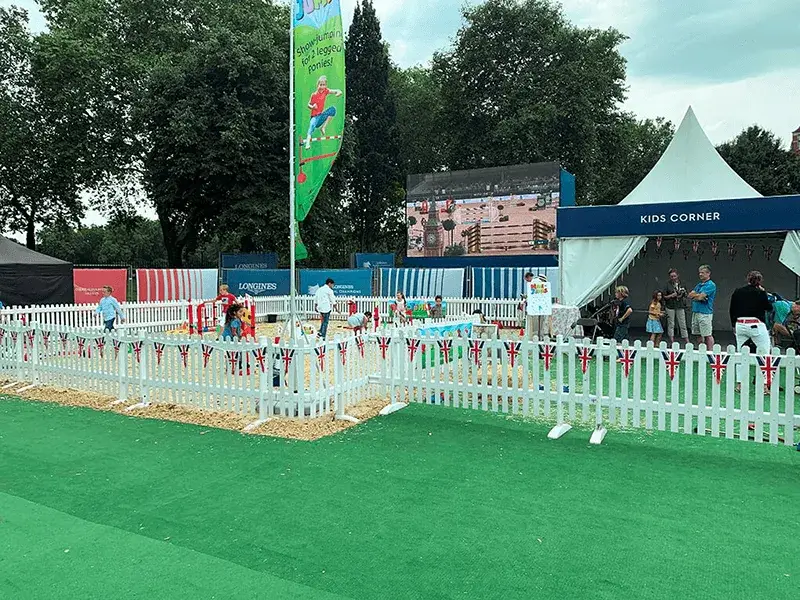
Garden party boundary. For outdoor receptions, corporate garden parties, or summer soirées, a low picket fence marks the edge of the event space without blocking the view. Guests know where the party is without feeling penned in.
VIP or backstage area. At festivals and larger events, picket fencing creates a softer alternative to crowd barriers for separating VIP areas, green rooms, or backstage zones. It keeps the premium feel without the industrial look of steel barriers.
Photo backdrop. A run of picket fencing behind a bandstand, photo booth, or selfie spot gives guests a clean, classic background. Add fairy lights or bunting and it becomes a feature in its own right.
Entrance and welcome area. Frame the entrance to your event with picket panels on either side. It gives guests a clear arrival point and makes a strong first impression before they even step inside.
Separating zones. Use short runs of fencing to define different areas within a larger site — bar from seating, catering from guest areas, or quiet space from dance floor. The visual separation works without needing signage.
How Much Fencing Do You Need?
Each picket fencing panel is roughly 1.8 metres wide, so calculating quantities is straightforward once you know your measurements.
For a ceremony aisle — Measure the length of the aisle and double it for both sides. A 20-metre aisle needs about 22 panels (20 ÷ 1.8 × 2, rounded up). For a shorter 10-metre aisle, 12 panels will do it.
For a marquee perimeter — Measure the length and width of your marquee, work out the total perimeter, and divide by 1.8. A 12m × 6m marquee has a 36-metre perimeter, so you would need 20 panels to go all the way around.
For a garden boundary or zone divider — Measure the linear metres you want to cover and divide by 1.8. A 30-metre boundary needs roughly 17 panels.
Add a few spares. It is always worth ordering two or three extra panels. Corners, gateways, and uneven ground can throw off your count, and having spares on site means you are not short on the day. With hire, you only pay for what you use — return any unneeded panels and you are not charged for them.
If you are unsure, our team can help you work out quantities based on your site plan. Just get in touch with your measurements and we will do the maths.
The Case for Hiring
Hiring picket fencing is the default choice for most event professionals, and for good reason. The biggest advantage is simple: it arrives, it goes up, it comes down, and it disappears. You are not left with fifty panels of fencing to store, repaint, and transport to the next venue.
No storage. Picket fencing is bulky. A single panel does not take up much room, but thirty panels do. That is a lock-up, a garage, or warehouse space you need to pay for, keep dry, and keep secure. Hiring eliminates that cost entirely.
No maintenance. White fencing does not stay white by itself. After a few outdoor events, panels pick up grass stains, mud splashes, and the odd scuff from transport. Someone needs to clean them down, touch up the paint, and check the feet are still secure. When you hire, that is the supplier's problem, not yours.
Delivery and collection included. GT Trax delivers to site, helps position the panels, and collects them afterwards. You do not need to own a long-wheelbase van or hire one at short notice because the fencing will not fit in the estate car. For an event organiser juggling a dozen suppliers on the morning of the event, not having to think about fencing logistics is worth the hire fee alone.
Always clean, always presentable. Hired fencing turns up looking fresh. No last-minute scrubbing because the panels have been sitting in a damp shed since last August. The supplier cleans and inspects every panel between hires, so what your client sees on the day is what they pictured when they booked you.
The Case Against Buying
Some businesses reach a point where they look at their annual hire spend and think, "We could buy the fencing for that." Here is what the spreadsheet does not show you.
Storage is a real cost. Thirty picket fencing panels stacked neatly occupy about two cubic metres, but they need to be stored flat and dry. If you do not have warehouse space already, you are renting it. If you do have warehouse space, you are giving up capacity you could use for something else. Either way, there is a cost.
Repainting is a recurring job. White painted timber fades, chips, and weathers. After a season of events, those panels will need a refresh. That means labour, paint, and somewhere to do the work that will not coat everything else in white overspray. Count on repainting at least once a year if the fencing is seeing regular use.
Transport is on you. Picket fencing panels do not fit in a standard car. You need a van or a trailer, and you need to factor in the fuel, the driver, and the time to load and unload at both ends. For venues that are not local, this can eat into margins faster than you expect.
Capital outlay. Thirty quality timber panels with steel feet will cost several thousand pounds upfront. That is money not being spent on marketing, stock, or other equipment that could grow the business. Hiring spreads that cost across the events you actually book, rather than tying it up in assets sitting in storage.
Cost Comparison at a Glance
| Factor | Hire | Buy |
|---|---|---|
| Upfront cost | Pay per event | Several thousand pounds |
| Storage | None | Requires dry, secure space |
| Maintenance | Supplier handles it | Your responsibility, annually |
| Transport | Delivered and collected | You arrange and pay |
| Appearance on the day | Clean and ready | Depends on your upkeep |
| Flexibility | Order exactly what you need | Stuck with what you own |
Which Route Is Right for You?
If you are doing a handful of events a year, hire without question. The per-event cost is predictable, the logistics are handled, and you are not carrying assets through the off-season.
If you are doing twenty-plus events a season and have a van, a warehouse, and someone on the team who can handle maintenance, buying might start to make sense. But even then, run the numbers carefully. Calculate the storage cost, the paint and labour for annual refurbishment, the vehicle costs, and the time your team spends loading and unloading. Compare that total against a hire quote for the same number of events. You might be surprised at how close the numbers come out, and hiring still wins on peace of mind.
For most event professionals, hiring is the smarter commercial decision. You get the product, the service, and the certainty that the fencing will look exactly right on the day, without any of the hidden work that comes with ownership.
Don't forget seasonality. The events industry runs in seasons. Most weddings and outdoor events happen between May and September. That means your fencing sits idle from November through to February — and if you own it, you are still paying for storage, and the panels are still gathering dust and damp. Hiring lets you scale up in the busy months and carry zero cost through the quiet ones. You pay for fencing when you are earning from events, and not a penny when you are not.
Products mentioned in this article
- Picket Fencing — white wooden picket fencing panels for weddings and events
- Event Furniture — tables, seating, and accessories for outdoor events
- Fencing & Barriers — crowd control, Heras fencing, and stage pit barriers
Browse our picket fencing for weddings and events, or explore our full range of event furniture and fencing and barriers.
You may also be interested in
- Essential Walkways for Outdoor Event Planning — how temporary walkways keep guests moving safely and protect your site, whatever the weather
Contact our team for a quote tailored to your event. We deliver nationwide and handle everything from delivery to collection so you can focus on the day itself.