
It Rains at British Festivals. Plan for It.
The data is clear: roughly two-thirds of UK summer festivals experience significant rainfall on at least one day of the event. That's not scaremongering, it's the Met Office.
Yet every year, organisers treat rain as an edge case rather than the base case. Here's why that's expensive, and what a proper rain plan looks like.
The Real Cost of Doing Nothing
When a festival site turns to mud without ground protection in place, the costs stack up fast:
- Cancelled performances, stages become unsafe to load if vehicles can't reach them
- Lost gate revenue, day-ticket holders stay home when social media fills with mud photos
- Landowner disputes, a churned field can take a year and tens of thousands of pounds to restore
- Reputational damage, footage of abandoned cars in muddy car parks outlasts any lineup poster
The cost of ground protection hire is a fraction of any one of these.
What a Rain Plan Includes
Pre-season assessment. Walk the site in wet conditions, or at least imagine them. Where does water sit? Which slopes become slides? Mark the risk zones on your site plan before tickets go on sale.
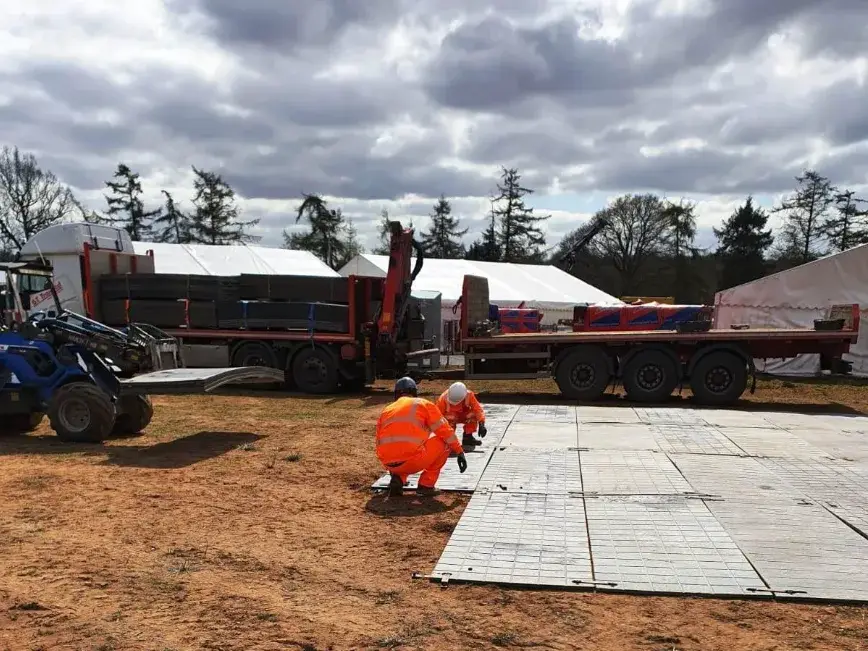
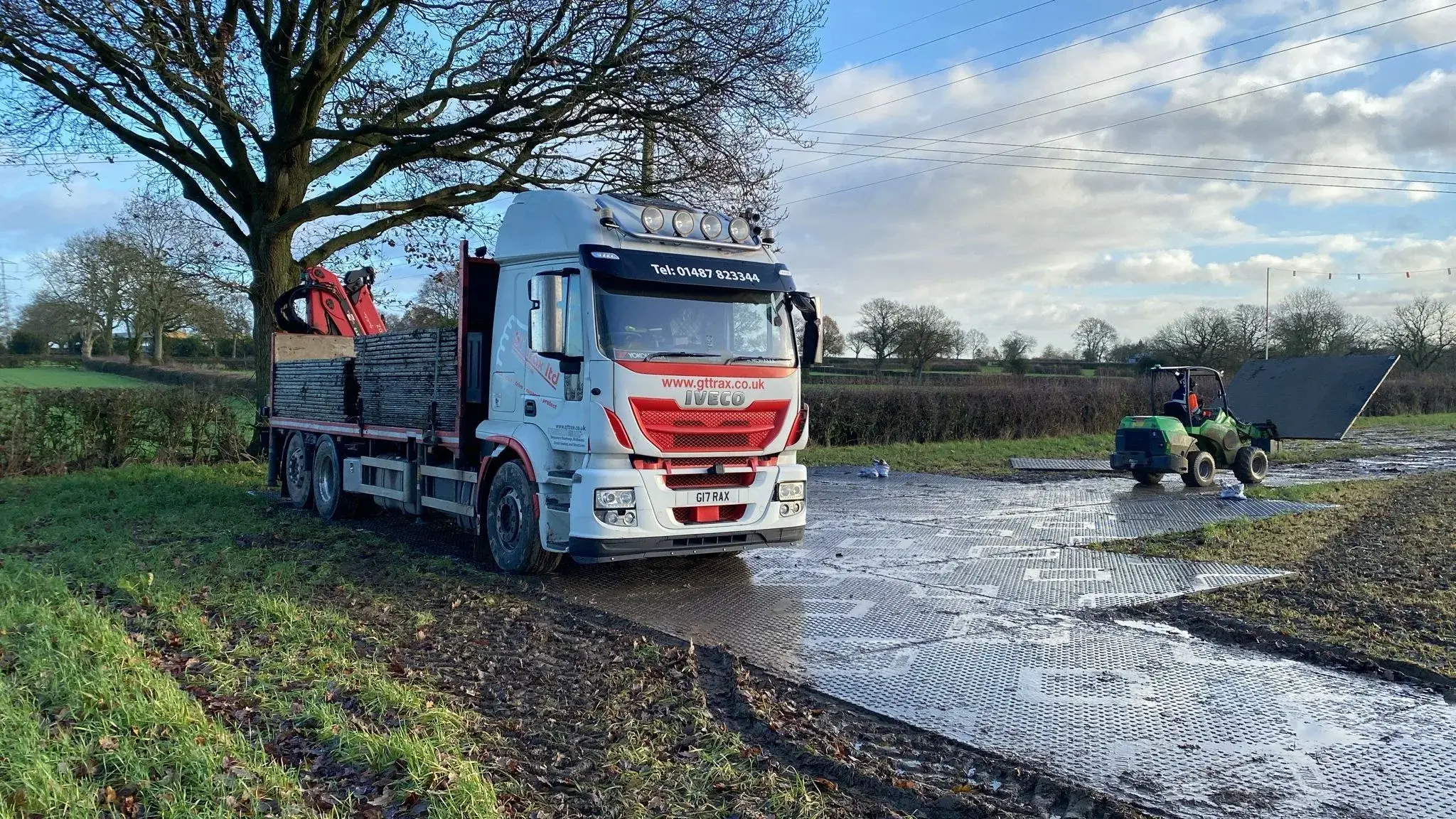
Standby agreement with a ground protection supplier. This is not the same as "we'll call someone if it rains." A standby agreement means your supplier has stock allocated to your dates and a crew briefed on your site. GT Trax offers pre-booked emergency cover so you're not competing for kit when the forecast turns.
Tiered response. Not every rain event needs the full fleet. A light shower on Day 2 might need a few extra WalkOvers at the main stage exit. Sustained heavy rain needs vehicle trackway, pedestrian routes, and Stretch Tent cover. Your plan should cover both.
Your Festival Rain Plan Checklist
Tick these off before tickets go on sale:
- Walk the site in wet conditions and mark every risk zone on your site plan
- Secure a standby agreement with your ground protection supplier, with stock allocated to your dates
- Define two response levels: light rain (spot protection) and sustained downpour (full-site deployment)
- Map vehicle access routes and mark where trackway will go if the ground softens
- Identify pedestrian corridors that need WalkOvers between key zones (entrance, stages, toilets, campsite)
- Plan shelter coverage for queue lanes, entrance gates, and bar areas
- Brief your site crew on trigger points: who makes the call, who deploys what, how fast
The Products That Make the Difference
Trackway for vehicle routes. When the ground softens, your supply chain fails first. PowerTrax 60 on the main access gate keeps HGVs moving regardless of conditions.
Walkways for pedestrian flow. WalkOvers create dry, stable routes through the busiest parts of your site. They're the single highest-impact item per square metre.
Stretch Tents for shelter. Rain concentrates crowds. Stretch Tents over queue lanes and bar areas distribute people and prevent bottlenecks.
The Best Time to Plan for Rain Is When It's Sunny
Every festival organiser who's ever dealt with a mud crisis says the same thing: I wish I'd sorted this last month when I had time.
Right now, before the forecast turns, is when you should lock in your rain plan. Walk the site. Call your supplier. Book the standby.
Products mentioned in this article
- PowerTrax 60 — heavy-duty trackway for vehicle access, car parks, and HGV routes
- WalkOvers — interlocking pedestrian walkway panels for safe, dry foot traffic
- Stretch Tents — weatherproof event shelters for crowd cover and queue lanes
You may also be interested in
- Top 10 Ground Protection Essentials for the Events Industry: a practical guide to protecting event sites with sustainable, safe, and site-friendly trackway solutions.
- Festival Site Equipment Checklist: a complete checklist covering trackway, walkway, barriers, furniture, and ramps for festival site setup.
Contact GT Trax to arrange a site assessment and standby agreement for your 2026 festival.