
When the ground turns against you
Utility works don't wait for dry weather. Water mains burst in December. Gas leaks need fixing in February. Telecoms upgrades roll through whatever conditions the calendar throws at them. When the ground is soft, wet, or uneven, a straightforward excavation becomes a logistical headache.
Heavy plant needs stable access. Pedestrians need safe diversion routes. Cables and hoses snaking across footpaths need protecting. Get any of these wrong and you are looking at stuck vehicles, trip hazards, and delays that cost money by the hour.
Ground protection is not a luxury for utility works. It is the difference between a job that runs smoothly and one that grinds to a halt.
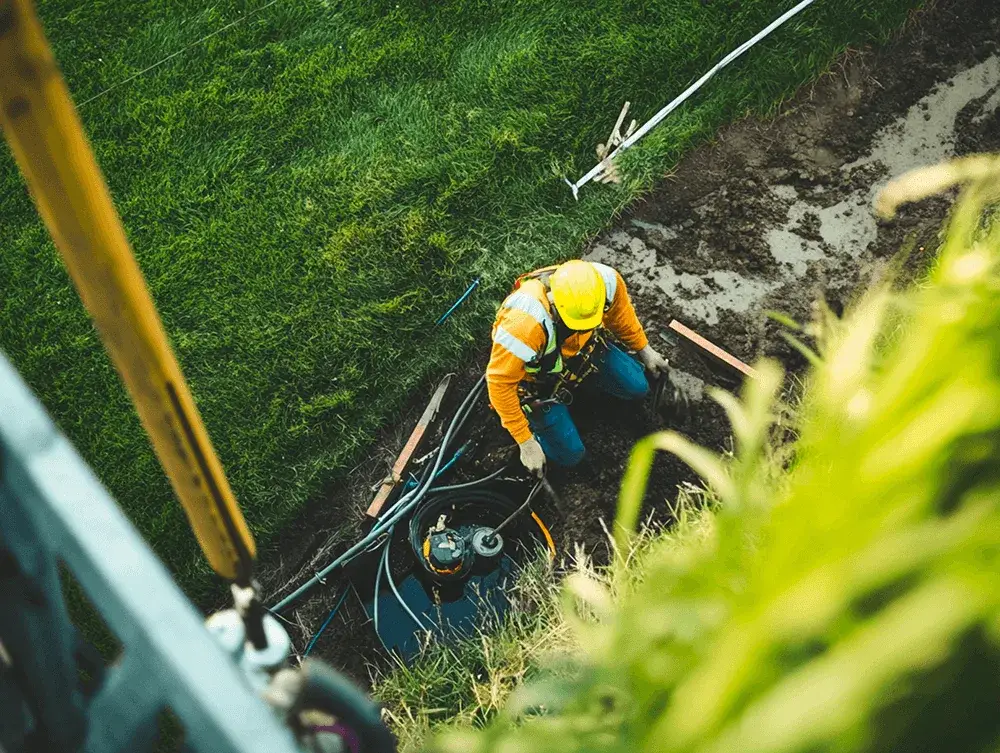
Trackway: Getting plant to the excavation
Utility excavations rarely happen conveniently next to a paved road. More often, the dig site is set back across a grass verge, a field margin, or a stretch of soft ground that has been saturated by weeks of rain. Drive an excavator or a vacuum tanker across that and you will rut it beyond recognition, and you might not even reach the trench at all.
Temporary trackway solves this. Heavy-duty panels like PowerTrax 60 and TuffTrak spread vehicle loads across a wide surface area, creating a stable access road that can handle anything from a 1.5-tonne mini digger to a fully loaded articulated lorry delivering pipe sections or aggregates.
For water board and gas network teams, this means:
- Excavators, dumpers, and vacuum excavators reach the dig face without getting bogged down
- Deliveries of materials arrive without destroying verges, fields, or landscaped areas
- The working compound stays accessible even after days of heavy rain
On electricity distribution and telecoms projects, where excavations are often smaller but still need plant access, lighter track mats like PowerTrax 20 or EuroMats provide the right balance of load capacity and deployment speed without over-specifying the protection.
The trackway also protects what is underneath. Utility works frequently cross privately owned land, sports fields, or environmentally sensitive areas. Leaving ruts behind can trigger compensation claims, reinstatement costs, and reputational damage that follows the contractor onto the next tender.
Walkways: Keeping the public safe around your works
Utility works rarely happen in isolation. A gas main replacement on a suburban street, a water pipe repair outside a school, a fibre-optic trench along a busy footpath. All of these put the public within metres of heavy machinery and open excavations.
Pedestrian management is a safety requirement, not a courtesy. Under the New Roads and Street Works Act 1991 and the Safety at Street Works and Road Works Code of Practice, utility companies and their contractors have a legal duty to protect the public around their sites.
Temporary walkways create clearly defined, stable pedestrian routes that keep the public separated from vehicles and excavations. LiteTrax GridMat panels or LuxTrax marquee flooring can be laid in minutes to form a continuous, non-slip surface that works in all weather.
Common applications on utility sites:
- Footpath diversions around open trenches
- Safe pedestrian corridors through site compounds
- Access routes for residents while driveways are blocked by works
- Level surfaces over uneven or muddy ground outside schools, hospitals, and care homes
Walkways also make sites more accessible for the workforce. Site cabins, welfare units, and material stores all need clean routes between them, and a well-laid walkway keeps boots out of the mud more effectively than a makeshift plank bridging a puddle.
Cable and hose protection: Eliminating trip hazards
Every utility site generates a web of cables and hoses. Water pumps, generators, traffic management systems, and over-ground pipe bypasses all need temporary connections. Left uncovered, these become serious trip hazards for workers and the public alike.
Cable and hose protection ramps cover temporary services at ground level, giving a ramped surface that pedestrians cross safely and light vehicles drive over without damaging what lies underneath. They are quick to deploy, durable enough for weeks of site traffic, and they signal that safety has been thought through properly.
For utility contractors, ramps are a low-cost, high-impact measure. They protect the workforce and the public from slips and trips, and they protect the contractor from the regulatory consequences of getting it wrong.
Why ground protection pays for itself on utility contracts
The direct costs of skipping ground protection are easy to tally: vehicle recovery when plant gets stuck, ground restoration after the job, delays while you wait for conditions to improve, and fines or enforcement from the local highway authority.
Then there are the indirect costs. Residents who complain to the client. Councillors who raise questions. Tender evaluators who remember which contractor left a mess and which one left the site clean.
On the other side, ground protection is straightforward to hire. GT Trax delivers nationwide, with installation crews who can lay hundreds of metres of trackway or walkway in a single shift. The panels are recovered just as quickly when the job is done, leaving the ground as it was found.
Whether you are a water company planning a trunk main replacement, a gas contractor starting a mains renewal, a telecoms provider rolling out fibre, or an electricity business maintaining overhead lines across farmland, ground protection belongs in your site setup from day one.
Products mentioned in this article
- PowerTrax 60 — heavy-duty track mats for HGVs, cranes, and heavy plant
- TuffTrak — versatile heavy-duty track mats
- PowerTrax 20 — mid-range trackway for 4x4s and light plant
- EuroMats — light vehicle access and temporary compounds
- LiteTrax GridMat — lightweight interlocking pedestrian tiles
- LuxTrax Marquee Flooring — premium marquee and event flooring
- Protection Ramps — cable and hose protection ramps
You may also be interested in
- Construction Site Access Checklist: a week-by-week construction site access checklist covering CDM compliance, vehicle routes, pedestrian segregation, and fencing planning.
- Ground Protection for Crane Pads and Outriggers: learn which ground protection mats prevent sinking, meet lift plan requirements, and keep crane operations safe on soft ground.
Contact GT Trax to discuss your site. We will help you work out the right protection, the right quantity, and a delivery schedule that fits your programme.