
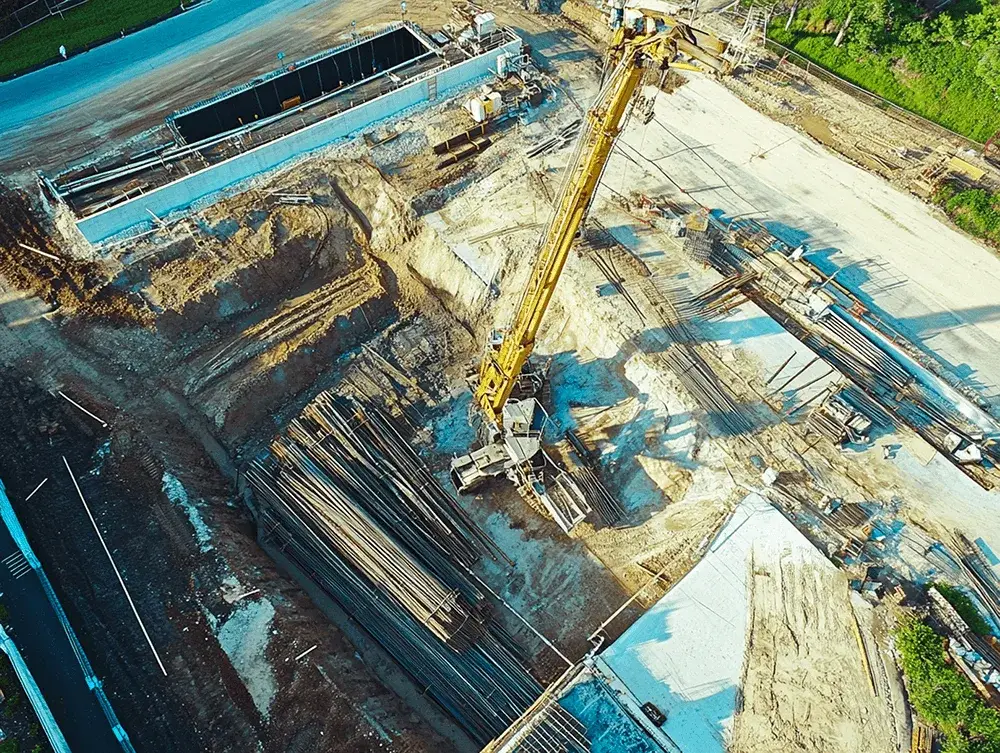
Rain Stops Work. Trackway Stops Rain Stopping Work.
Every UK construction project has weather days built into the programme. But there's a difference between "too wet to pour concrete" and "too wet to get a delivery wagon to the pour."
The first is unavoidable. The second is a ground protection problem, and it's solvable.
The Real Cost of a Wet Site
When rain turns site access routes to mud, the consequences cascade:
- Concrete wagons can't reach the pour: pours get cancelled and pumps stand idle
- Material deliveries stack up at the gate: pallets of blocks, steel reinforcement, and drainage pipe sit on wagons that won't risk the access road
- Muckaway wagons get stuck: spoil piles build up because the wagons can't get to the stockpile
- Subcontractors walk off: bricklayers, plasterers, and finishing trades can't work if they can't get materials
- Programme slips: every lost day pushes the completion date back
The cost isn't the trackway. The cost is the standing time.
The Access Road Is Everything
A construction site lives and dies by its access road. If the road holds, the site works. If the road fails, the site stops.
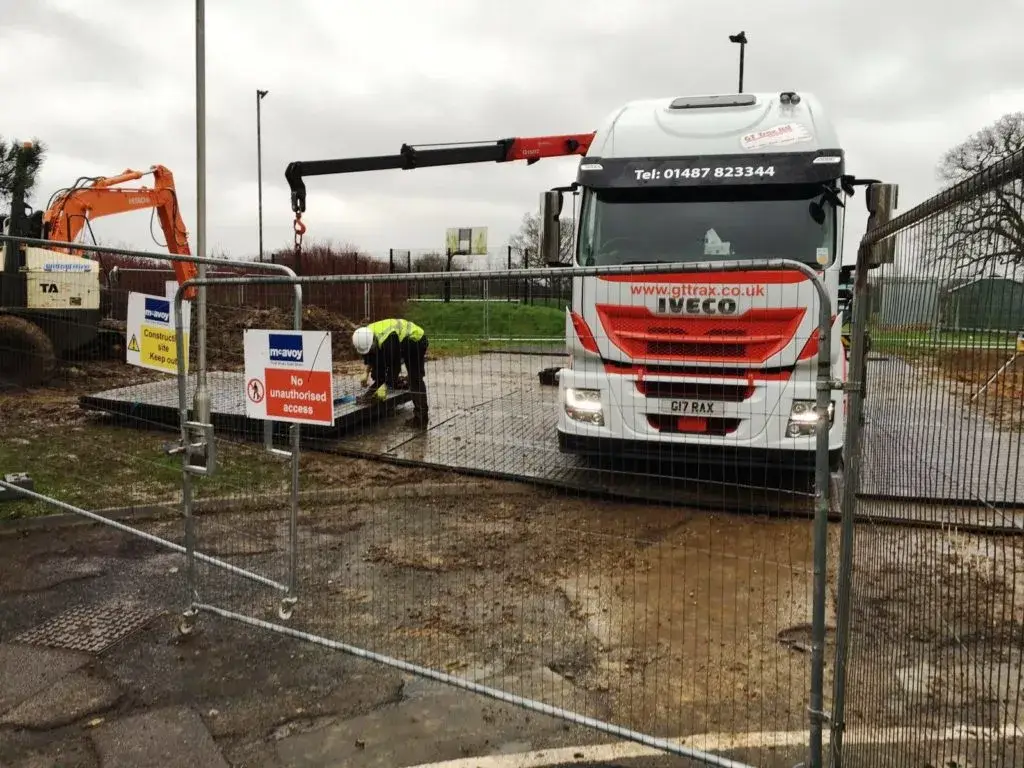
Lay PowerTrax 60 from the public highway to the worksite compound. One lane, wide enough for wagons to pass a banksman. The full length, not just the bit that looks soft.
Site access roads fail predictably:
- At the gate: where vehicles turn off the hard surface onto the site. This transition point takes a beating from every vehicle that enters
- On the incline: where wagons accelerate up a slope and wheelspin cuts ruts
- At the turning point: where vehicles brake and turn, concentrating load into a small area
Reinforce these points. Double-width at the gate, extra panels on the slope, a solid pad at the turning circle.
Keeping Pedestrian Routes Open
It's not just vehicles. Workers walking across a muddy site track mud into finished areas, slip on wet ground, and slow down. WalkOvers on the main pedestrian routes keep people moving safely.
Separate the pedestrian route from the vehicle route. Workers on foot shouldn't share a trackway lane with a reversing concrete wagon.
The Programme Argument
A construction programme includes weather allowances, typically 10-15 days per year for adverse conditions. But those days are supposed to cover genuinely unworkable conditions, not ground failure that could have been prevented.
If your site shuts down because delivery wagons can't access the worksite, that's not a weather problem. That's a ground protection problem. And it's one that could have been solved with trackway laid during the good weather, ready for the bad.
When to Lay It
The best time to lay ground protection is when the ground is firm. In summer, before the autumn rains. During a dry spell, before the wet winter.
But construction doesn't work like that. Sites open when they open, and sometimes the ground is already soft on day one. We install trackway in all conditions. Our crews work on live sites, around other trades, and can have a site access road laid within a day of order.
Products mentioned in this article
- PowerTrax 60 — heavy-duty trackway for vehicle access, car parks, and HGV routes
- WalkOvers — interlocking pedestrian walkway panels for safe, dry foot traffic
You may also be interested in
- Construction Site Access Checklist: a week-by-week checklist covering vehicle routes, pedestrian segregation, and ramp protection.
- The Importance of Temporary Roadways: why temporary roadways are the difference between a working site and a stalled programme.
- What Load Rating Do I Need for My Site Traffic?: understand what your vehicles weigh and which track mats can handle them.
Contact GT Trax to discuss site access ground protection for wet weather.