
A practical checklist for the wet months
Winter site preparation is not about reacting to bad weather. It is about having the systems in place before the first hard frost or the first week of sustained rain, so the site keeps working when the ground stops being able to carry anything.
This checklist runs in the order you would actually do it. Late summer and early autumn for the preparation, the wet months for monitoring, and the end of the season for recovery. Work through it once and it doubles as next year's plan.
Before winter, late summer to October
- Walk the site with the project manager and groundworks lead. Mark low-lying ground, natural drainage lines, and the sections that stayed wet last winter.
- Photograph the site while it is dry. Those reference images are how you show what the ground looked like before the winter did its work.
- Review the plant and delivery schedule for November to March, and work out which routes will carry the heaviest loads.
- Clear ditches, culverts and drains on and around the site boundary before leaves and debris block them.
- Check that your insurance covers weather-related ground damage and vehicle recovery, and update it if it does not.
- Brief subcontractors on the winter access plan, including which routes their delivery drivers use.
Sort the drainage first
- Work out where water will pool during sustained rainfall. Even a gentle slope channels it into one or two trouble spots.
- Cut temporary swales or channels to move water away from access routes and working areas. Keep them shallow enough that plant can still cross them safely.
- Put a sacrificial layer of clean stone on critical haul roads. A stone running surface stays passable far longer than bare earth.
- Put stockpiles and material bays on the higher, better-draining ground, and avoid excavating new low spots in the wrong place.
- Test the pumps before you need them. A pump that sat in the container all summer often fails on the first cold morning.
Ground protection: quantity, timing and sequence
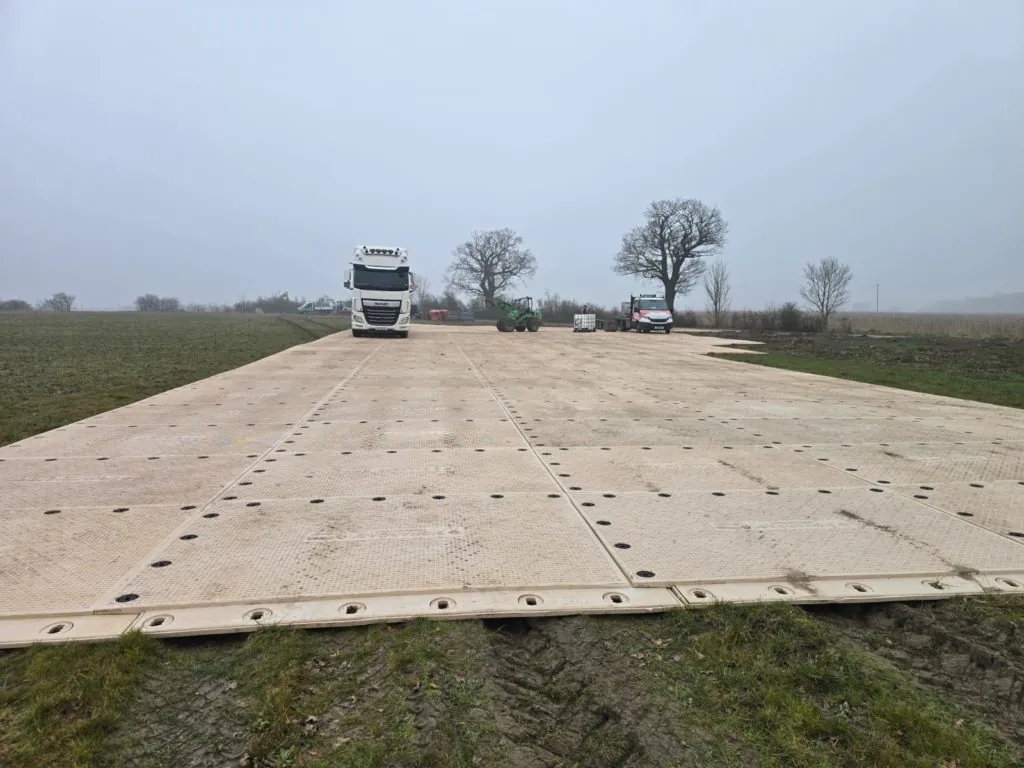
Ground protection takes the largest share of the winter budget, and it is the item where planning matters most. The reasoning behind it, from how saturated ground fails to which panel suits which condition, is in winter ground protection. What follows is the logistics.
- Measure the access route that needs covering, including the compound entrance, the run to the working area and any turning circles.
- Decide what each section needs. The main haul route carrying HGVs and heavy plant is not the same job as the welfare unit and the pedestrian route. PowerTrax 60 is the heavy end of the range for haul routes and crane pads, and WalkOvers do the pedestrian work.
- Order early. Stock gets tight across the industry as winter approaches, and a late order risks both availability and the delivery slot.
- Book installation when you place the order. Our crews can lay significant quantities in a day, but they need notice to schedule it.
- Plan the recovery sequence before anything goes down. Mats that go in first usually come out last, and a badly sequenced recovery traps vehicles behind a wall of removed panels.
Contingency stock
- Keep a reserve of panels on site or on short call-off for the sections that always fail first.
- Hold clean stone, terram and a few bog mats for emergency repairs outside the main trackway run.
- Keep the recovery gear in one place: tow strops rated for the plant, shackles, a spade and boots that fit the people who will use them.
- Agree a weekly call with your trackway supplier through the worst months. Five minutes catches most problems before they turn into delays.
Monitoring through the winter
- Daily: walk the access routes first thing. Look for standing water, fresh rutting and panels that have shifted, and photograph anything that concerns you.
- Weekly: clear the drainage channels and inspect mat joints for movement or uneven loading.
- After heavy rain: walk the site before vehicles start moving. Test suspect ground with a site vehicle before sending an HGV onto it.
- Monthly: read the four-week forecast and adjust the layout or the delivery schedule if a long wet spell is coming.
- Keep a log. The date, what you checked, what you did about it. It earns its keep on insurance claims, client reporting and next year's plan.
End of season, March to April
- Book collection in advance. Recovery slots fill up as sites across the country wind down.
- Clean panels where there is water available. Mud-caked panels are heavier to handle and slower to load.
- Inspect the ground after removal and schedule restoration before the summer dry spell.
- Review this checklist while the detail is fresh and update it for next year.
Frequently asked questions
When should I start preparing a construction site for winter?
Late summer. The preparation items on this checklist are best worked through between August and October, while the ground is still firm and before the wet weather arrives. Drainage, haul route repairs and ground protection orders all need to be in place before the first sustained rain, not after the first rut appears.
What should a winter site preparation checklist cover?
Drainage, access routes, ground protection, contingency stock and monitoring. The order matters: water has to be moved away from the routes before panels go down, and the panels have to be ordered before the forecast turns. A short daily walk of the access routes then catches most failures before they stop the site.
How do I stop a construction site turning to mud in winter?
Keep vehicles off the soil and move water away from the routes they use. Ground protection spreads load across a panel instead of concentrating it under a wheel, and drainage stops the ground underneath from staying saturated. Neither works alone. Saturated clay will fail under a panel if the water has nowhere to go, and drainage will not save a route that heavy plant keeps cutting up.
How often should access routes be checked in winter?
Daily, and again after heavy rain before vehicles start moving. Check for standing water, fresh rutting and panels that have shifted, and photograph anything that looks wrong. A weekly check of drainage channels and mat joints catches the slower deterioration that a daily walk past the same route can miss.
Products mentioned in this article
- PowerTrax 60: 60mm HDPE composite trackway for haul routes, crane pads and heavy plant
- WalkOvers: recycled tyre pedestrian panels that keep workers off the mud
You may also be interested in
- Winter Ground Protection for Construction Sites: why saturated ground fails, and which panel to lay when it has.
- Keeping a Construction Site Moving in Wet Weather: where access roads fail and how to protect the sections that matter.
- Construction Site Access Checklist: the vehicle, pedestrian and ramp checks that run alongside this one.
Contact our team to plan winter access for your site. Send us the routes and the plant schedule and we will work out the panels and the installation window with you.