
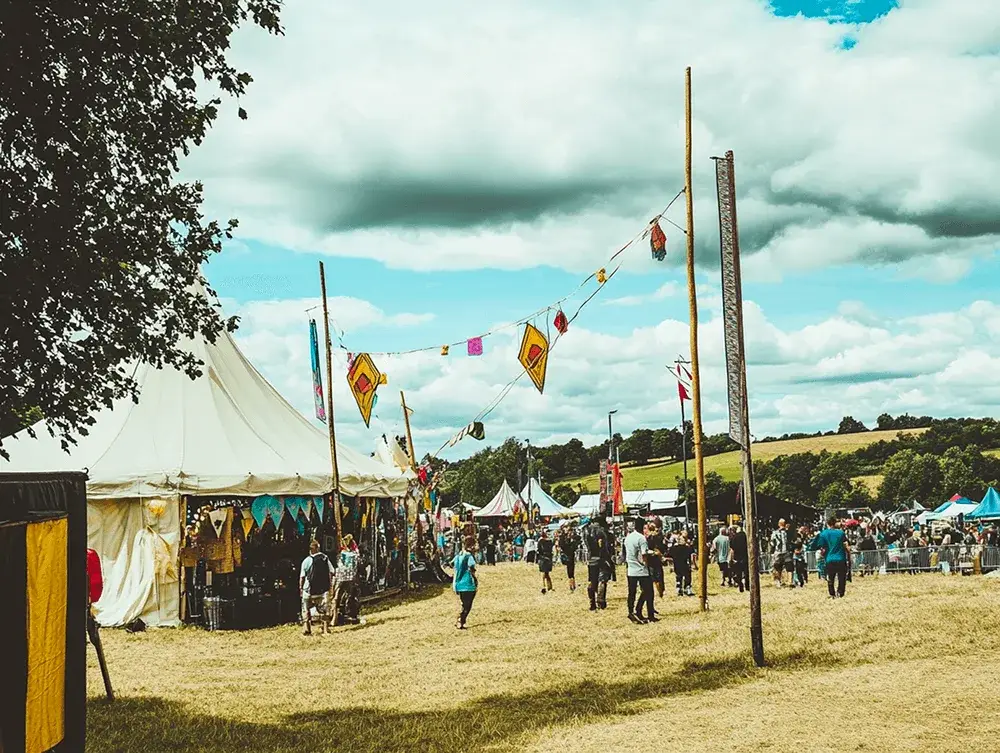
What grass damage really costs your venue
If you manage a venue that hosts outdoor events, you know the drill. After a busy weekend, you walk the grounds and find deep tyre ruts across the main lawn. The grass is gone in places where a stage truck reversed in. Footpaths through the paddock have turned to mud. What started as a profitable booking now comes with a restoration bill that wipes out your margin.
Grass damage is not just an aesthetic problem. It hits your bottom line in three ways: repair costs, lost revenue while the ground recovers, and reputational damage with neighbouring landowners or local authorities. For venues on historic estates, in Areas of Outstanding Natural Beauty, or near Sites of Special Scientific Interest, the stakes are higher still. One bad event can jeopardise your licence to host future ones.
The good news is that most grass damage is entirely preventable. The right ground protection, laid before the first vehicle or crowd arrives, keeps your venue looking the way your clients expect.
Vehicles do the worst damage, and they do it fast
Foot traffic wears grass down over time. Vehicles destroy it in minutes.
A single delivery truck turning on soft ground can cut ruts six inches deep. Repeated passes from crew vehicles, generators, and catering vans compact the soil and kill the root system. Once the grass has gone, water pools, mud forms, and the damage spreads with every step.
This is why back-of-house areas need vehicle-rated trackway. It is not enough to hope the ground holds up. It rarely does, especially in the British climate where rain can turn firm turf into a bog overnight.
Trackway for back-of-house: keep the heavy stuff moving
For production compounds, loading zones, and access lanes, you need a surface that can carry serious weight without shifting or sinking. PowerTrax 60 is our heaviest-duty panel, rated for HGVs and large plant. It interlocks to form a continuous road that spreads the load and keeps the grass underneath intact.
PowerTrax 40 offers a lighter but still robust alternative, ideal for crew vans, smaller delivery vehicles, and areas where the ground is reasonably firm but still needs protection. Both systems go down fast and come up clean, so your turnaround between events stays tight.
A common mistake is laying trackway only on the obvious trouble spots. Once the ground gets wet, vehicles carving around the edge of a trackway panel create new damage that can be just as expensive to fix. Cover the whole route properly, including turning circles and loading bays.
Walkways for pedestrian areas: protecting grass underfoot
Out in the public areas, the risk is different. Ten thousand pairs of feet will not cut ruts like a lorry, but they will turn grass to bare earth if the weather turns wet. Uneven ground, trip hazards, and mud make the site look neglected and feel unsafe.
WalkOvers are our go-to pedestrian walkway solution. They are made from recycled tyres, interlock securely, and provide a level, slip-resistant surface that protects the grass beneath. They are rated for wheelchairs and pushchairs, which matters for accessibility compliance.
LiteTrax gives you a lighter, faster option for temporary routes and areas with lighter footfall. For marquees, VIP zones, and anywhere you want a more finished look, LuxTrax Marquee Flooring provides a smart surface that feels comfortable underfoot.
Planning ahead: what a protected site looks like
The difference between a protected and unprotected site is stark. Picture two scenarios from real events:
Without protection: A festival site in the Midlands after a wet August weekend. The main access road is a churned mess of mud and broken turf. Catering trucks had to be towed out. The venue spent three weeks and several thousand pounds on reseeding and drainage repair, losing two subsequent bookings because the grounds were not fit for use.
With protection: A summer concert at a stately home in the South East. PowerTrax 40 panels formed a network of back-of-house roads from the service entrance to the stage compound. WalkOvers linked the car park, box office, and main arena. After load-out, the panels came up in a day. The grass underneath was green, flat, and undamaged. The venue was ready for its next event within 48 hours.
The protected site did not cost more in ground protection. It cost less overall, because the hire fee for trackway and walkway panels was a fraction of what restoration would have been.
Mapping your site: where to put protection
A proper ground protection plan starts with a site walk. Mark out every route a vehicle will take: crew access, catering deliveries, generator drops, waste collection. Then mark the high-traffic pedestrian routes: entrance to arena, arena to toilets, arena to bars. Do not forget the areas that only get busy for an hour at the end of the night when everyone leaves at once.
GT Trax can help with this. Our team has worked on hundreds of events across the UK, from small wedding venues to major festivals. We know where the pressure points are and how to protect them. A site visit takes the guesswork out of the planning and gives you a clear picture of what you need and what it will cost.
The sustainability piece
Venues are under growing pressure to demonstrate environmental responsibility, and ground protection plays straight into that. Every panel in the GT Trax fleet is reusable. WalkOvers are made from recycled tyres. At end of life, the material is fully recyclable. Choosing reusable trackway and walkway systems is a concrete step you can point to in your sustainability reporting, and it aligns with the expectations of event organisers who are increasingly asking venues what they are doing to minimise their impact.
Protecting your reputation starts with protecting your grass
Your venue's grounds are one of its biggest assets. They are the first thing a client sees on a site visit and the thing they remember when deciding whether to book again. Ground protection is not an optional extra. It is the difference between a venue that handles events professionally and one that pays for them afterwards.
Products mentioned in this article
- PowerTrax 60: heavy-duty composite trackway rated for HGVs and large plant.
- PowerTrax 40: rubber track mats for crew vans and lighter delivery vehicles.
- WalkOvers: recycled-tyre pedestrian mats rated for wheelchairs and pushchairs.
- LiteTrax: lightweight grid matting for lighter footfall routes.
- LuxTrax: solid interlocking flooring for marquees and VIP areas.
You may also be interested in
- Why Every British Festival Needs a Rain Plan: planning for wet weather before it hits.
- Top 10 Ground Protection Essentials for the Events Industry: the kit every event organiser should have.
- Essential Walkways for Outdoor Event Planning: keeping pedestrians moving safely.
Contact our team to talk through your next event. We will help you put a plan together that keeps your grass green and your clients coming back.